

Tree Damage Roof Repair in Massachusetts
A fallen tree or a heavy branch can puncture a roof, damage the deck beneath and open the home to the weather, and it needs to be dealt with carefully: the tree itself, the hole it has made, and the water that follows. This page explains what to do when a tree has damaged a roof, how the damage is dealt with, and what happens next.
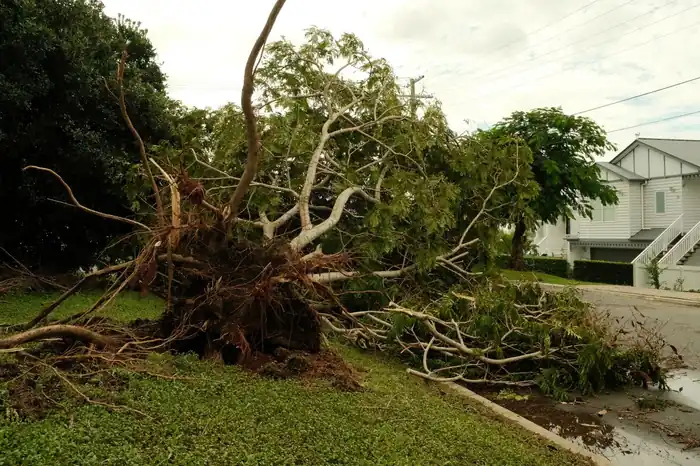
What to Do When a Tree Has Fallen on the Roof
Stay out of the affected rooms and stay off the roof. A fallen tree can leave the structure unstable, and branches under tension can move without warning. If water is coming in, move valuables away and place a container beneath the drip. If the tree has brought down wiring, avoid the area entirely. Photograph the damage from the ground for the homeowner's own records, and request help through the estimate form, describing the tree and the damage seen.
What Tree Damage Does to a Roof
A fallen tree can puncture the covering and the deck beneath, crush flashing and gutters, and open a section of roof to the weather. Even a branch that looks small can crack the deck or split the membrane on a flat roof. The damage is often wider than the visible hole, since the impact can loosen shingles and flashing around it. The assessment looks at the whole affected area, not just the puncture itself.
How Tree Damage Is Repaired
Tree damage repair begins with the tree being dealt with so the roof can be reached safely, and temporary protection such as tarping is put in place where the roof is open. The damaged covering is removed, the deck beneath is checked and any damaged sections dealt with, and the covering and flashing are renewed. The finished area is checked over, and the attic is checked for water entry. The findings and the scope are explained before the repair is agreed, with an estimate.
Insurance and Tree Damage
Whether tree damage is covered depends on the individual insurance policy, and coverage is a matter for the homeowner and the insurer to settle. What an assessment provides is a clear, documented picture of the damage found, which is what an insurer will ask to see. Keep records of the event, photographs of the damage, and notes of any temporary protection put in place. No promise about coverage can be made on a roofing page, and none is made here.
Trees, Roofs and Massachusetts Weather
Tree damage in Massachusetts most often follows nor'easters, high winds and heavy snow, when branches heavy with snow or weakened by ice come down. Overhanging branches are the usual source, and keeping them back from the roof is the preventive step worth taking between storms. The preventive inspection page covers what to look for, and the emergency roofing pages explain what to do when damage has already happened.
Problems and Solutions
Common Problems
- Tree or branch fallen on the roof
- Puncture through the covering and deck
- Roof open to the weather
- Flashing and gutters crushed
- Water coming in through the damaged area
- Structure possibly unstable beneath the tree
How These Problems Are Addressed
- Temporary protection to keep the weather out
- Damaged covering removed and deck checked
- Deck sections dealt with where damaged
- Covering and flashing renewed
- Attic checked for water entry
- Whole affected area assessed, not just the hole
How It Works
Request Urgent Help
Describe the tree and the damage seen through the estimate form.
Situation Assessed
An independent local provider assesses the damage and the urgency of the situation.
Temporary Protection
Where needed, temporary protection is put in place to keep the weather out.
Scope and Estimate
The damage and the recommended repair are explained, with an estimate.
Repair Carried Out
Once agreed, the provider repairs the damaged area and checks the deck beneath.
What to Expect
Benefits
- Urgent requests treated as a priority
- Temporary protection keeps the weather out
- Deck beneath checked for hidden damage
- Whole affected area assessed
- Damage documented for the homeowner's records
- Findings explained in plain language
Frequently Asked Questions
Stay out of the affected rooms and stay off the roof, since the structure may be unstable and branches under tension can move. If water is coming in, move valuables away and place a container beneath the drip. Photograph the damage from the ground and request help through the estimate form.
Whether tree damage is covered depends on the individual insurance policy, and that is a matter for the homeowner and the insurer. An assessment provides a documented picture of the damage found, which is what an insurer will ask to see. No promise about coverage is made here.
The damaged covering is removed, the deck beneath is checked and any damaged sections dealt with, and the covering and flashing are renewed. Temporary protection such as tarping is put in place first where the roof is open, and the attic is checked for water entry.
The cost varies with the extent of the damage, whether the deck beneath is affected, the material involved and whether temporary protection is needed first. An estimate for the particular roof is the way to get a figure.
Keeping overhanging branches back from the roof is the preventive step worth taking, and a preventive inspection will note branches that pose a risk. Storms can still bring down branches, which is why the emergency pages explain what to do when damage has happened.
Ready to Discuss Your Roofing Project?
Tell us about your roofing needs and take the next step toward protecting your property.