

Roof Installation Services in Massachusetts
New roof installation is the fitting of a roof where none existed before: on a new build, an addition, or a home where the roof is being fitted for the first time. The choices made at installation, material, underlay, ventilation and flashing, shape how the roof performs for its whole life. This page explains the installation options and what the work involves.
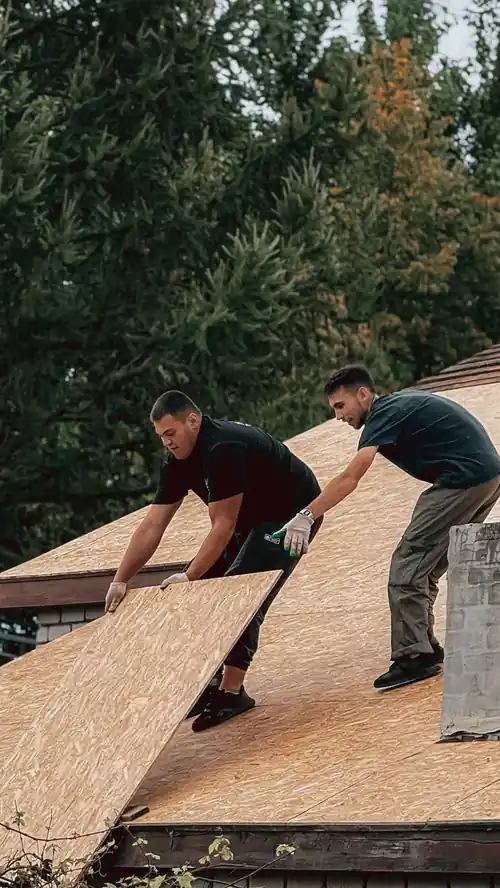
When a New Roof Is Installed
A new roof is installed on a new build, on an addition such as a dormer or an extension, and on a home where the roof structure is being fitted for the first time. It is a different job from a replacement, since there is no old covering to remove and the deck is new. The installation pages cover the main material choices: asphalt shingle, metal, flat and tile systems, each with its own fitting details.
Roof Installation Options
Asphalt shingle installation is the most common choice for Massachusetts homes, metal installation suits steep pitches and snow-shedding, flat installation covers low-slope sections and additions, and tile installation suits homes where a tile covering fits the style and structure. Each option is explained on its own page, with the fitting details and the considerations that apply in Massachusetts.
What Installation Involves
Installation begins with the deck, which must be sound and even before anything is fitted. Underlay and ice and water protection go on at the eaves, in the valleys and around penetrations, flashing is fitted at every joint, and the chosen covering is installed course by course or panel by panel. Ventilation beneath the deck is fitted as part of the work, since it keeps the roof surface even in winter and helps the covering last.
Installation Materials and Massachusetts Weather
The material chosen has to suit Massachusetts weather: freeze-thaw cycles, ice dams, nor'easters and humid summers. Asphalt shingles suit most homes, metal sheds snow well, flat membranes are made for low-slope surfaces, and tile suits only certain styles and structures, with thin demand across the state. The materials page explains the choices in more detail, and the installation pages set out what each material needs in this climate.
Installation Costs and Estimates
The cost of a new roof installation varies with the size and pitch of the roof, the material chosen and access to the property. Because no two roofs are alike, a figure can only be given after an assessment of the particular home and its plans. The estimate sets out the scope before any work is agreed, so the homeowner knows what is included.
Installation, Ventilation and the Home Beneath
A new roof is the moment to get ventilation and insulation right, since both are hard to change once the covering is on. Ventilation beneath the deck keeps the roof surface even in cold weather, which limits ice dams, and it helps the covering last. The installation scope looks at these as well as the covering, so the roof is built as a system rather than a surface.
Problems and Solutions
Common Problems
- New build needing a first roof
- Addition or extension needing roofing
- Roof structure fitted for the first time
- Material choice to be made for a new roof
- Ventilation and underlay to be planned
- Flashing needed at every new joint
How These Problems Are Addressed
- Asphalt shingle installation for most homes
- Metal installation for steep pitches
- Flat installation for low-slope sections
- Tile installation where the style suits
- Underlay and ice and water protection fitted
- Ventilation fitted as part of the work
How It Works
Request an Estimate
Describe the project and the roof needed through the estimate form.
Roof Assessment
An independent local provider looks at the structure and the plans for the roof.
Scope and Estimate
The material options and the scope of the work are explained, with an estimate.
Work Arranged
Once the scope is agreed, the provider arranges the installation.
Final Check
The finished roof is checked over and the work is explained.
What to Expect
Benefits
- New roof built as a complete system
- Material options suited to Massachusetts weather
- Ventilation and underlay fitted from the start
- Flashing fitted at every joint
- Independent local providers carry out the work
- Clear scope and estimate before work begins
Frequently Asked Questions
Installation begins with a sound deck, then underlay and ice and water protection at the eaves, valleys and penetrations, flashing at every joint, and the chosen covering fitted course by course or panel by panel. Ventilation beneath the deck is fitted as part of the work.
Asphalt shingles suit most homes, metal suits steep pitches and snow-shedding, flat membranes suit low-slope sections, and tile suits only certain styles and structures. The provider carrying out the work will explain the options available for the particular property and how each one suits the home.
The cost varies with the size and pitch of the roof, the material chosen and access to the property. An estimate for the particular home is the only way to get a figure, and it sets out the scope before any work is agreed.
Yes. Ventilation beneath the deck is fitted as part of the work, since it keeps the roof surface even in cold weather, limits ice dams and helps the covering last. The installation scope will explain how ventilation is planned for the particular roof.
How long a roof lasts varies with the material, the quality of the installation, ventilation beneath the deck and the weather it faces. The installation pages explain what each material offers, and the provider can give a view on the particular roof once the scope is known.
A new roof is fitted where none existed before, such as a new build or an addition. A replacement removes an old covering and fits a new one in its place. The two are different jobs, and the estimate will be based on whichever applies to the particular property.
Ready to Discuss Your Roofing Project?
Tell us about your roofing needs and take the next step toward protecting your property.