

Roof Flashing Repair in Massachusetts
Flashing is the metalwork that seals the joints of a roof: where it meets a chimney, a wall, a skylight or another slope in a valley. These joints are where most roof leaks begin, because they are the places water naturally collects and changes direction. This page explains what flashing does, how it fails, and what renewing it involves.
What Flashing Does
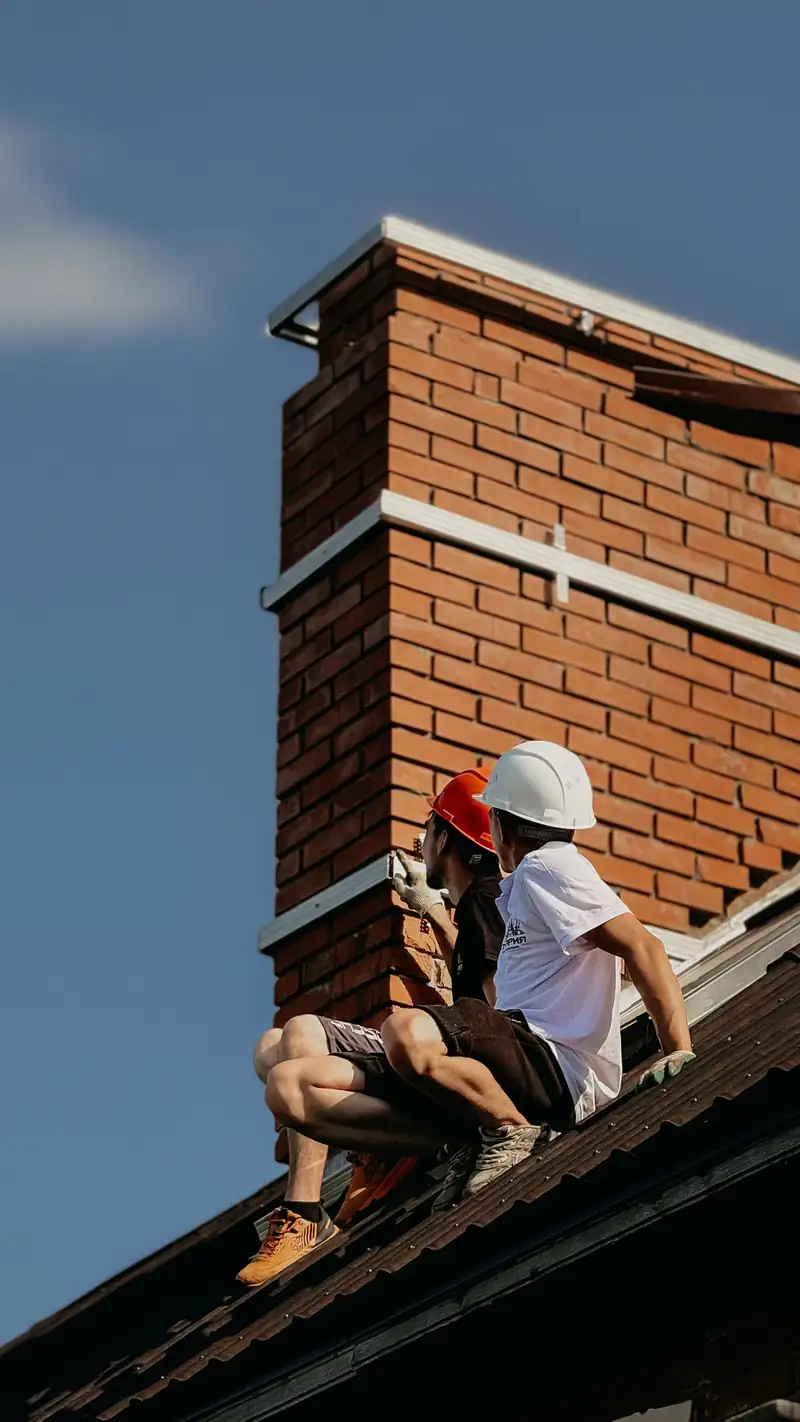
A roof covering sheds water down a slope, but at every joint the water has to be guided across a change of surface or direction, and that is the job of flashing. Around a chimney it forms a stepped seal between brick and shingle; in a valley it carries the combined runoff of two slopes; at a wall junction it turns water away from the building. When flashing is sound, these joints stay dry even in wind-driven rain. When it fails, water finds the gap.
How Flashing Fails
Flashing fails in several ways. Sealant dries and cracks with age, metal corrodes, especially in coastal salt air, and freeze-thaw cycles work fixings loose a little at a time. A chimney that settles or a roof deck that moves can open a gap where the flashing meets the masonry. Poorly fitted flashing, with the wrong overlap or too little coverage, leaks from the start and only gets worse. Storms can also lift flashing that was already loose.
Signs Flashing Needs Attention
The signs often appear inside: a damp patch on the wall below a chimney breast, staining where a roof meets an upstairs wall, or a leak that appears near a skylight. Outside, the signs are flashing that has lifted, rusted, pulled away from the masonry, or lost its sealant. A leak that returns after the shingles nearby have been checked is often a flashing problem, since the covering itself can be sound while the joint leaks.
What Flashing Repair Involves
Flashing repair means removing the old metalwork and sealant at the joint, checking the deck and masonry beneath, and fitting new flashing with the correct overlaps and fixings. Around a chimney this usually means stepped flashing with a counter-flashing set into the mortar joint. In valleys the flashing is renewed as a continuous run. The surrounding shingles are lifted and refitted so the new flashing sits beneath the covering in the right order, shedding water outward.
Flashing and Massachusetts Conditions
Massachusetts gives flashing a hard life. Freeze-thaw cycles pry at fixings and sealant, ice dams push meltwater against the joints at the eaves, and nor'easters drive rain sideways into valleys. On the coast, salt air speeds corrosion of the metalwork. Flashing fitted for these conditions uses durable material and proper overlaps, and it is checked as part of any roof inspection, since a small flashing failure can cause a large amount of interior damage.
Problems and Solutions
Common Problems
- Damp patch below a chimney or wall junction
- Leak appearing near a skylight
- Flashing lifted, rusted or pulled away
- Cracked or missing sealant at joints
- Staining where the roof meets a wall
- Leak returning after shingles were checked
How These Problems Are Addressed
- Stepped flashing renewed around chimneys
- Valley flashing replaced as a continuous run
- Wall junction and skylight flashing resealed
- Corroded metalwork replaced
- Counter-flashing reset into mortar joints
- Surrounding shingles refitted over new flashing
How It Works
Request an Estimate
Describe where the leak appears and which joint is involved through the estimate form.
Roof Assessment
An independent local provider examines the flashing, the masonry and the surrounding covering.
Scope and Estimate
The condition of the joint and the recommended renewal are explained, with an estimate.
Repair Carried Out
Once agreed, the provider renews the flashing with correct overlaps and fixings.
Final Check
The joint is checked over to confirm water is guided away from the building.
What to Expect
Benefits
- Seals the joints where most roof leaks begin
- Protects chimneys, valleys and skylights
- Suited to freeze-thaw and coastal salt air
- Renewed flashing outlasts a sealant-only fix
- Surrounding covering refitted in the correct order
- Estimate provided before work begins
Frequently Asked Questions
Flashing repair is the renewal of the metalwork that seals the joints of a roof, such as around chimneys, in valleys, at wall junctions and around skylights. The old flashing and sealant are removed, the surface beneath is checked, and new flashing is fitted with the correct overlaps so water is guided away from the joint.
Flashing is often the cause when a leak appears near a chimney, a wall junction, a skylight or a valley, or when a leak returns after the shingles nearby have been checked. Visible signs include lifted or corroded metal, gaps at the masonry, and cracked sealant. An assessment confirms the source before any work is agreed.
Sealant can help as a short-term measure, but it dries and cracks with age and does not last the way new flashing does. When flashing is corroded, lifted or poorly fitted, renewal is the lasting answer. The assessment will explain which approach suits the particular joint.
The cost varies with the type of joint, the length of flashing involved, the height and pitch of the roof, and whether masonry work is needed around a chimney. An estimate for the particular roof is the way to get a figure.
A flashing repair fails when the underlying cause is missed, such as a chimney that has moved, a valley that carries more water than the flashing can handle, or sealant used where new metalwork was needed. Renewing the flashing with correct overlaps and fixings addresses the joint properly rather than covering it.
Ready to Discuss Your Roofing Project?
Tell us about your roofing needs and take the next step toward protecting your property.