

Professional Roof Repair Services in Massachusetts
Roof repair is the targeted answer to a roof problem: a leak traced to its source, a patch of damaged shingles replaced, flashing renewed, or a flat roof membrane sealed. It makes sense when the roof as a whole is still sound and the damage is localised. This page explains the problems repair addresses, the signs that point to repair, and how repair compares with replacement, while the pages below cover each repair type in detail.
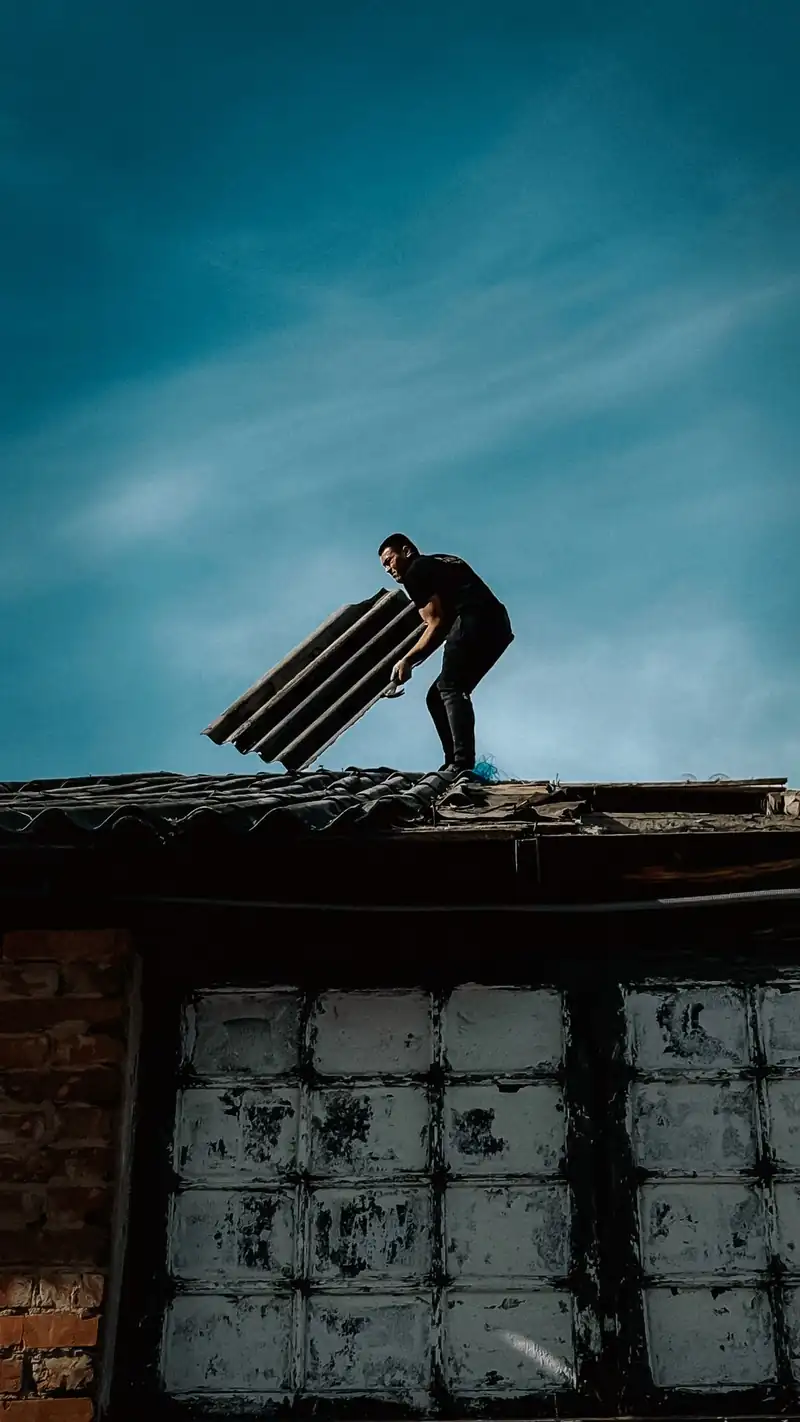
Roofing Problems Repair Can Address
Most roof repairs fall into a small set of problems. Water getting in through a failed flashing, a cracked shingle or a worn membrane is the most common, and it often shows up as a stain on a ceiling some distance from the actual entry point. Wind can lift or remove shingles, ice dams can force water under the covering, and flat roofs can develop ponding and seam wear. A repair visit starts by finding the source, because fixing the visible symptom without addressing the cause leaves the problem in place.
Roof Repair Services Available
Leak repair, shingle repair, flashing repair, flat roof repair and storm and hail damage repair each have a dedicated page, and each one deals with a different part of the roof. Leak repair focuses on tracing water entry and sealing it at the source. Shingle repair replaces the damaged covering. Flashing repair renews the metalwork where the roof meets chimneys, walls and valleys. Flat roof repair deals with membranes, seams and drainage. Storm damage repair deals with the aftermath of wind, hail and fallen debris.
Common Signs a Roof Needs Repair
The clearest signs appear inside the home: damp patches or stains on ceilings and walls, peeling paint, or a musty smell in the attic. Outside, the signs are missing, cracked or curling shingles, granules collecting in the gutters, sagging sections, and flashing that has lifted or corroded. A roof that has been through a nor'easter or a heavy snow season deserves a look even when nothing is visible from the ground, since damage often starts where it cannot be seen.
When Repair Is Enough, and When It Is Not
Repair is the right answer when the damage is localised and the rest of the roof still has serviceable life. It stops being the right answer when leaks return in different places, when wear is spread across the whole roof, or when the covering has aged to the point that new problems keep appearing. In those cases a replacement is usually the more sensible course, and the replacement pages explain how that decision is weighed. An inspection gives an honest basis for the choice either way.
Roof Repair and Massachusetts Weather
Massachusetts weather is hard on roofs. Freeze-thaw cycles open small gaps a little wider each winter, ice dams push meltwater under shingles at the eaves, and nor'easters drive rain sideways into valleys and flashing. Coastal homes add salt air, which corrodes metalwork sooner. Repair work in this climate has to suit the conditions, with attention to ice and water protection, ventilation and the way water is shed from the roof.
What Happens During a Roof Repair Visit
A repair visit begins with an assessment of the roof and, where needed, the attic space beneath it, so the source of the problem is found rather than guessed at. The findings are explained in plain language, with the recommended scope and an estimate for the work. Once the scope is agreed, an independent local provider carries out the repair, and the finished area is checked over at the end.
Problems and Solutions
Common Problems
- Water stains on ceilings or walls
- Missing, cracked or curling shingles
- Flashing that has lifted, rusted or pulled away
- Flat roof seams and membrane wear
- Ice dam damage at the eaves
- Wind and hail damage after a storm
How These Problems Are Addressed
- Leak repair traced to the source
- Shingle replacement for damaged sections
- Flashing renewal at chimneys, walls and valleys
- Flat roof membrane and seam repair
- Storm and hail damage repair
- Ice dam related repairs at the eaves
How It Works
Request an Estimate
Describe the problem and the property through the estimate form.
Roof Assessment
An independent local provider examines the roof and the affected area to find the source of the problem.
Scope and Estimate
The findings are explained, with the recommended repair scope and an estimate.
Repair Carried Out
Once the scope is agreed, the provider completes the repair.
Final Check
The repaired area is checked over and any questions are answered.
What to Expect
Benefits
- Fixes the source of the problem, not just the symptom
- Keeps a sound roof in service without full replacement
- Addresses leaks before they damage the home beneath
- Suited to Massachusetts weather, including ice dams and nor'easters
- Clear scope and estimate before work begins
- Covers shingles, flashing, flat roofs and storm damage
Frequently Asked Questions
The most common repairs are fixing leaks, replacing damaged or missing shingles, renewing flashing around chimneys and valleys, and sealing flat roof membranes. Ice dam damage at the eaves and wind damage after storms are also frequent in Massachusetts. Each of these has a dedicated page with more detail.
The cost varies with the size of the affected area, the material, the extent of the damage and how easy the roof is to access. A small flashing repair and a large flat roof repair are very different jobs. An estimate for the particular roof is the way to get a figure.
A leak can usually be repaired when the rest of the roof is in reasonable condition and the entry point can be found and sealed. Replacement becomes the sensible option when leaks keep returning in different places or the covering is worn across the whole roof. An inspection gives a clear basis for the decision.
Flashing is often the cause when a leak appears near a chimney, a wall junction, a skylight or a valley. Signs include lifted or corroded metal, gaps where the flashing meets the masonry, and stains on the wall below the junction. The flashing repair page explains how it is checked and renewed.
Repair work can be carried out in cold weather, though the approach depends on the material and the conditions on the day. Ice dam related repairs are a winter staple in Massachusetts. The provider carrying out the work will explain what is practical for the particular roof and season.
A repair that addresses the source of the water entry should stop that particular leak. What it cannot do is renew a roof that is worn out overall, in which case new problems may appear elsewhere. The assessment that comes with the estimate is the honest way to tell which situation applies.
Ready to Discuss Your Roofing Project?
Tell us about your roofing needs and take the next step toward protecting your property.