

How Often Should You Inspect Your Roof?
A roof is the one part of a home that is expected to work for decades with almost no attention — and then blamed when it fails. In practice, a little attention at the right times catches most roofing problems while they are still small: a flashing that has pulled away, a shingle that has lifted, a gutter that is blocked, or damp insulation in the attic. The question is how often, and when. This article gives a practical rhythm for Massachusetts homeowners, explains what changes the rhythm, and describes what an inspection should cover.
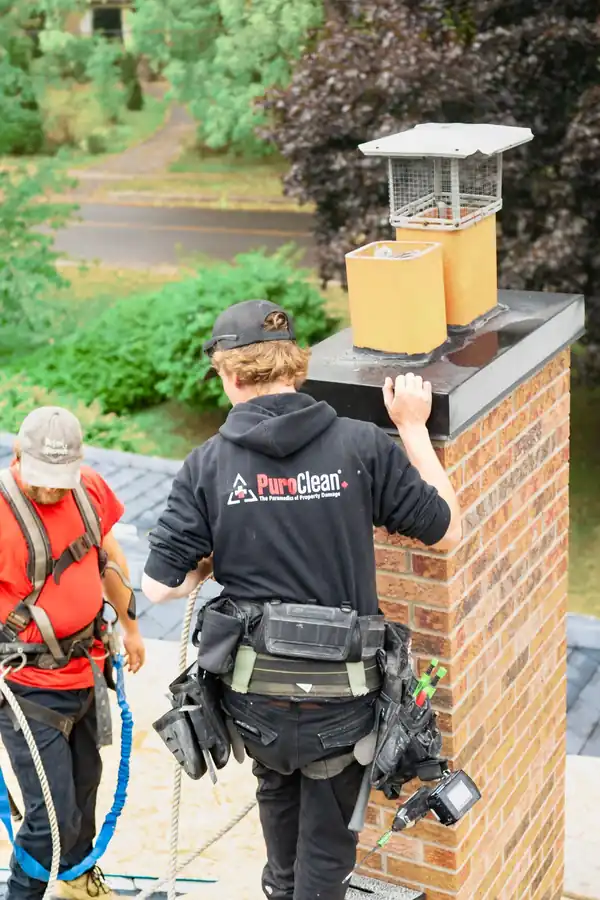
The practical rhythm: once a year, after winter
For most Massachusetts homes, a practical rhythm is a full inspection once a year, ideally in spring after winter has ended. Winter is the hardest season for a Massachusetts roof — snow, ice dams, and freeze-thaw cycles — and the damage it causes often shows up in spring: lifted shingles, damaged flashing, wet decking, and stains on ceilings that appear weeks after the snow has gone. A spring inspection catches that damage before the next winter adds to it, and before summer storms test the same weaknesses. A homeowner can do a basic check from the ground and in the attic; a provider's inspection is more thorough, because it covers the roof surface itself, the flashing details, and the attic. Either way, the annual check is the habit that matters most.
After every major storm
In addition to the annual check, a roof should be inspected after every major storm — a nor'easter, a hailstorm, or a storm with high winds. Wind can lift shingles that have not yet come off, hail can bruise shingles without breaking them, and wind-driven rain can find weaknesses in flashing that calm weather never tests. The damage is often not visible from the ground, which is why an inspection after a storm looks at the attic as well as the surface. If the storm was severe enough to bring down branches or to damage neighbouring roofs, your roof deserves a check even if nothing is leaking yet. Document what is found with dated photos, because the record helps any insurance conversation that follows.
Before buying or selling a home
A roof inspection is a sensible step before buying a home, particularly for older Massachusetts houses, triple-deckers, and brownstones, where the roof's condition, the flat sections, and the flashing details affect the purchase decision. An inspection gives the buyer evidence rather than a guess, and it can inform negotiations about the price or about repairs before the sale. For sellers, an inspection before listing can find problems that would otherwise surface in the buyer's inspection — and fixing them first is usually simpler than negotiating them later. Either way, the inspection should cover the roof surface, the flashing, the gutters, and the attic.
When the roof is older, or has had problems before
Some roofs need checking more often than once a year. A roof that is ageing, that has had ice-dam or leak problems before, or that has flat sections with membrane roofing benefits from a check twice a year — spring and autumn. Autumn matters because gutters need to be clear before winter, and because a flashing or shingle problem found in autumn can be fixed before snow arrives. Coastal homes, where salt air accelerates wear on flashing, also benefit from more frequent checks. And any roof that has had a repair should be checked in the next rain, to confirm the repair worked. The rule is simple: the more the roof has been through, the more often it should be looked at.
What a good inspection covers
A good inspection covers the roof surface — shingle condition, granule loss, curling or lifting, membrane condition and seams on flat sections, and ponding water that stays after rain. It covers flashing at chimneys, walls, valleys, skylights, and the transitions between pitched and flat sections. It covers gutters and downspouts, and whether they discharge water away from the building. And it covers the attic — daylight through the boards, damp or stained insulation, staining on the underside of the deck, and ventilation. The findings should be explained in plain terms, with the options that follow: a targeted repair, a section replacement, a full replacement, or nothing more than monitoring. An inspection that ends with a single prescribed answer, without an explanation, is not a useful one.
What owners can check themselves, and what needs a provider
Owners can do a useful basic check without climbing onto the roof: from the ground with binoculars, look for missing or lifted shingles, damaged flashing, sagging gutters, and debris in valleys. In the attic, look for daylight, damp insulation, and staining on the deck. Those checks are worth doing after winter and after storms. What needs a provider is the close inspection of the roof surface itself — walking the roof, lifting shingle edges, checking membrane seams, and assessing the deck — because that work is dangerous for anyone who is not trained and equipped for it, and because the signs are easy to misread without experience. If the basic check finds anything wrong, or if the roof is steep, flat, or otherwise hard to approach, request a provider's inspection rather than investigating further yourself.
Frequently Asked Questions
Once a year, ideally in spring after winter, plus an inspection after every major storm. Older roofs, roofs that have had problems before, and coastal homes benefit from a check twice a year — spring and autumn.
Spring, after winter, is the most useful time, because winter's damage — ice dams, lifted shingles, damaged flashing — shows up then. Autumn is the second most useful time, because gutters need to be clear and any problems found can be fixed before snow arrives.
You can do a useful basic check from the ground with binoculars and in the attic, looking for missing shingles, damaged flashing, daylight, and damp insulation. The close inspection of the roof surface itself needs a provider, because it involves walking the roof and reading signs that are easy to misread.
No. An inspection reports what was found and explains the options. The owner decides whether to proceed with any work, and when.
Ready to Discuss Your Roofing Project?
Tell us about your roofing needs and take the next step toward protecting your property.