

How Snow Affects Your Roof in Massachusetts
Snow is the defining roofing challenge in Massachusetts. It is not a single event but a season-long pattern: snow falls, sits, melts from attic heat, refreezes at the eaves, and repeats through freeze-thaw cycles that test every part of the roof. Inland towns hold snow longer than the coast, and the Merrimack Valley — Lowell, Haverhill, and the towns around them — is known for some of the worst ice-dam problems in the state. This article explains how snow damages roofs, what ice dams are and why they form, and what to check when winter ends.
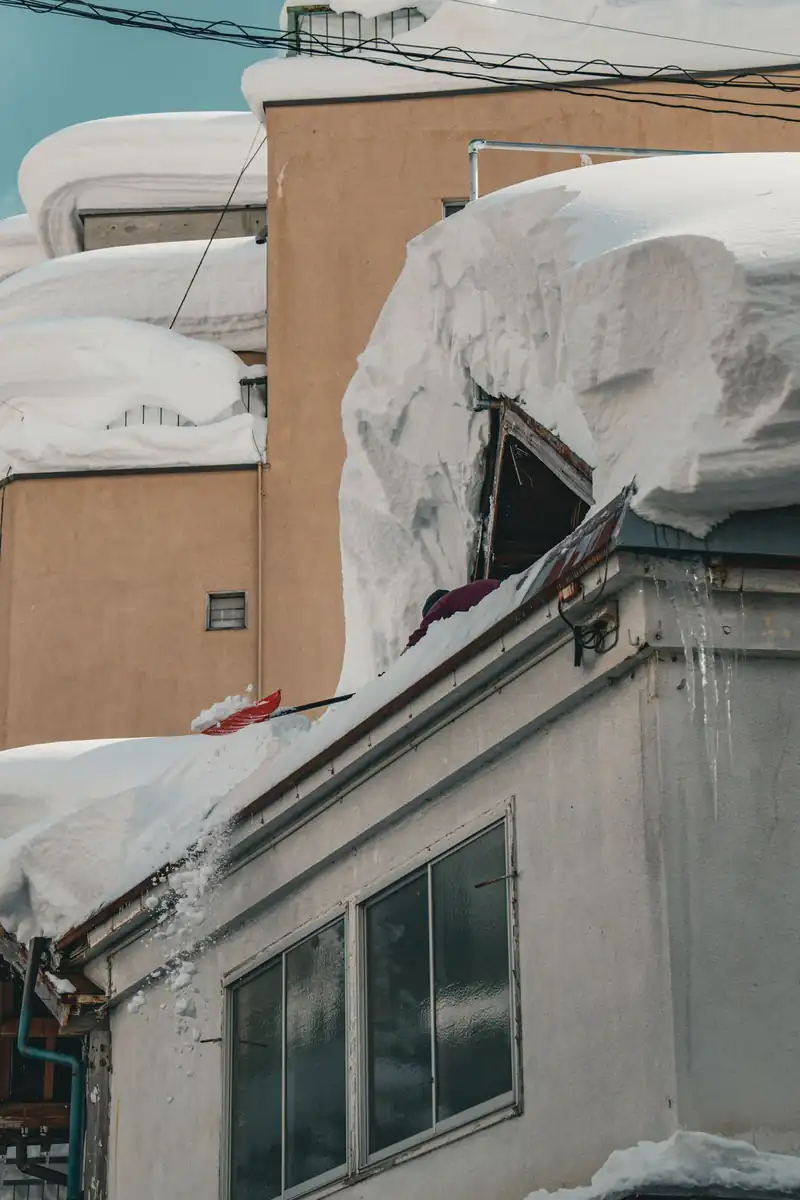
Snow load: weight on the roof
Snow is heavy, and a deep snowfall adds a real load to a roof. Most Massachusetts roofs are built for the snow the state expects, and a well-maintained roof handles a normal winter without difficulty. The risk grows when snow is unusually deep, when it is wet and heavy rather than light and dry, or when it drifts and piles up on one part of the roof — in a valley, against a dormer, or on a flat section that cannot shed it. Flat and low-slope roofs are more vulnerable than steep ones, because they hold snow rather than shedding it. The practical signs of trouble are sagging, new cracks in ceilings or walls, and doors or windows that suddenly stick. Those signs mean the roof should be checked promptly. Clearing snow from a roof is dangerous work and should not be done from a ladder in icy conditions.
Ice dams: how they form and why they leak
An ice dam is the most common snow-related roofing problem in Massachusetts, and it is worth understanding properly. Snow on the roof melts from heat escaping into the attic — not from the sun alone — and the meltwater runs down to the colder eaves, where it refreezes and forms a ridge of ice. More meltwater pools behind that ridge, and because it cannot drain, it backs up under the shingles and into the roof. That is why ice-dam leaks appear at the eaves and in the rooms below them, and why they can recur all winter. The dam itself is visible as a ridge of ice at the gutter line, often with icicles; the damage it causes — lifted shingles, wet decking, stained ceilings — may not show until the thaw. Ice dams are a symptom of heat and ventilation, not just of snow.
Freeze-thaw cycles: small gaps become leaks
Massachusetts winters do not stay cold. Temperatures swing above and below freezing repeatedly, and each swing is a small test of the roof. Water gets into a tiny gap in flashing or a shingle edge, freezes, expands, and opens the gap a little wider; the next thaw lets in a little more water, and the cycle repeats. Over a season, that process can turn a small weakness into a leak. It is the reason that flashing — at chimneys, walls, valleys, and the transitions on triple-deckers — deserves particular attention after winter, and why a roof that survived last winter without a leak can develop one this winter. The damage is gradual, and it is often found in the attic before it shows on a ceiling.
Gutters, valleys, and flat roofs in snow
Gutters are part of the snow story. A gutter blocked with autumn leaves holds water that freezes, and the ice at the eaves feeds the dam behind it. Keeping gutters clear before winter is one of the simplest defences. Valleys collect snow and channel meltwater, so they are a common place for ice to build up and for leaks to start. Flat and low-slope roofs hold snow rather than shedding it, so their drainage matters more: a blocked drain or scupper leaves water standing, and standing water finds seams. After a heavy snowfall, the useful checks are the eaves, the valleys, and any flat sections — from the ground, with binoculars, not from a ladder on ice.
Preventing snow damage: ventilation, insulation, and protection
The most effective defences against snow damage work together. Ventilation keeps the attic close to the outside temperature, so snow on the roof melts evenly rather than from below. Insulation keeps heat in the living space rather than letting it escape into the attic. Ice-and-water protection — a waterproof membrane installed at the eaves, in valleys, and around penetrations — gives the roof a second line of defence where water is most likely to back up. Keeping gutters clear before winter helps too. No single measure is a guarantee, and a roof that has already suffered ice-dam damage may need the deck and flashing repaired as well as the cause addressed. An inspection after winter can show which of these a particular home needs.
What to check after winter ends
When the snow clears, check the roof from the ground and the attic from inside. Look for shingles that are lifted, curled, or missing; flashing that has pulled away from a chimney or wall; gutters that sag or have pulled away from the fascia; and stains on ceilings, particularly near the eaves and in the rooms below valleys. In the attic, look for damp insulation, staining on the underside of the deck, and daylight through the boards. Note anything you find, with photos and dates, and request an inspection if anything looks wrong — including if a stain appears weeks after the snow has gone, since ice-dam damage often shows up late. A spring inspection is the practical habit that catches winter's damage before the next winter adds to it.
Frequently Asked Questions
An ice dam forms when snow melts from attic heat and refreezes at the colder eaves, forming a ridge of ice that backs meltwater up under the shingles. It is the most common snow-related roofing problem in Massachusetts.
Yes. Snow load stresses the structure, freeze-thaw cycles open small gaps in flashing and shingles, and ice dams can damage the deck and insulation before a leak shows inside. An inspection after winter catches damage that has not yet become a leak.
Clearing snow from a roof is dangerous work and should not be done from a ladder in icy conditions. Keeping gutters clear before winter and having the roof inspected after winter are the safer steps for most owners. If snow load is a concern, a roofing provider can advise on the specific situation.
It comes down to attic heat and ventilation: homes where heat escapes into the attic and where ventilation is poor melt snow from below and feed ice dams. Insulation, ventilation, and ice-and-water protection at the eaves are the standard defences.
Ready to Discuss Your Roofing Project?
Tell us about your roofing needs and take the next step toward protecting your property.